“Hey, can you make that?” Josh asked our second kiddo. Derek was showing him all the characters in my Star Wars crochet pattern book, which he looks through a LOT.
“No. I want to learn crochet, but Mama hasn’t taught me yet.”
Ouch. My first internal response was slight annoyance. Well, if you wanted to so badly, why has it been months since you asked? My second response, though, was a more fair stab of guilt. I could remember him asking me about it, only to be put off every time. Eventually, he left me alone but clearly hadn’t forgotten or lost interest. I only had to think about how often he read that crochet book to see that.
I’m not saying I didn’t have good reason to say no. I was probably busy, or worn out, or simply done with education after a day of homeschooling. I’m not even saying teaching kids handicrafts is a requirement of parenting. However, what I realized in that moment was that I had violated my own beliefs on what crafting is and should be.
Let’s rewind a bit. Some time ago I saw a video related to crafting online. I’ve long since forgotten what the video was about specifically, or what platform it was on, but one thing did stick with me. It was the folks in one part of the comment section talking about how much they hated being asked, “Would you teach me to do that?”. I remember how much it bothered me. Not because I think crafters are obligated to teach everyone who wants to learn how to do what they do, but because I see crafting so differently.
Everything I know how to do right now was, in some capacity, given to me as a free gift of knowledge. My mom taught me hand sewing and introduced me to the sewing machine. My dad let me help him build a shelf for my room, teaching along the way. My grandmother shared my love of crochet, and although I can’t remember who exactly taught me, she was certainly involved in my continued interest. Friends sat with me while I muddled through my first knitted sock, patiently helping when I had to frog (undo the knitting) for the fourth time. Neighbors came over to paint, parents drove me to art classes, church members guided me through recovering a chair. Later, I gained a lot of knowledge through free YouTube videos and online downloadable patterns. All of it freely given, for the love of the craft and the desire to make it accessible for others to love.
Perhaps there are others who weren’t blessed with this experience. Maybe they had to pay for classes, or painstakingly work through written or video lessons without any sort of in-person help (more difficult than it might sound when you are an absolute beginner). And in that case, maybe their frustration with others’ request to teach is justified. They put in a ton of work, all on their own; now they just want to enjoy their accomplishment. Understandable. I can’t help but feel an instinctive distaste for the sentiment though, especially if that wasn’t the case. If instead, like many people, they were sat alongside, helped, guided, loved, I can’t help but feel like there is, in fact, some obligation to pay that forward. For the true lovers of handcrafting, if we have freely received, shouldn’t we just as freely give? Not to every random person we meet in the wild, sure, but the willingness ought to be there.
That’s what I believe anyway, and apparently somewhat deeply considering how uncomfortable I felt reading that comment section. Which is why, in that moment a few days ago, something inside me felt very convicted. I had to sit with the knowledge that by ignoring my kid’s requests, I was being, in a word, a hypocrite. Yikes.
Fortunately, kids are forgiving, and the best way to fix a mistake is to first admit fault, and then to actually do something about it.
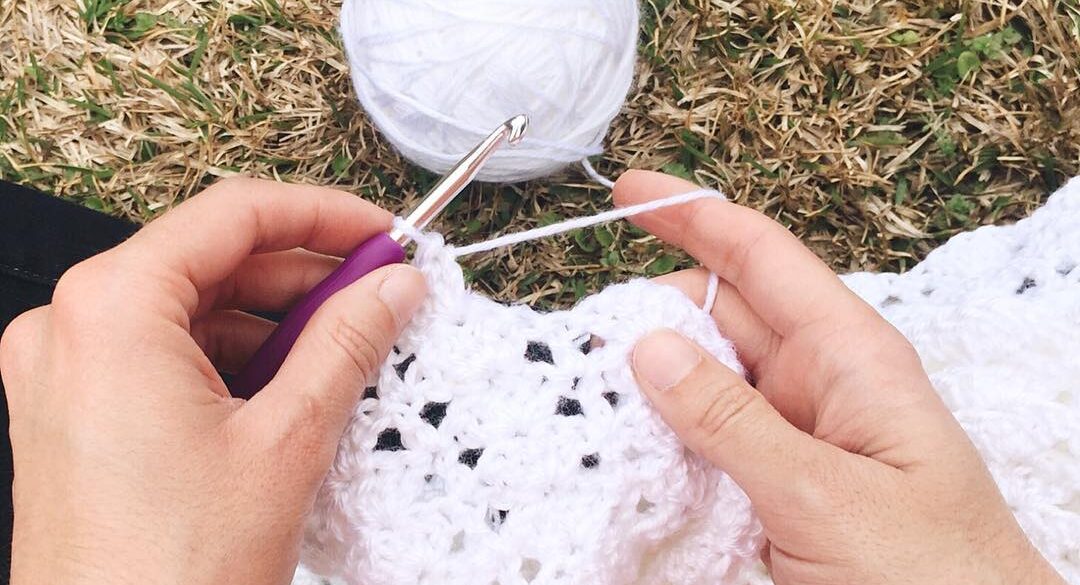
I started teaching him to chain the next day.
Leave a Reply